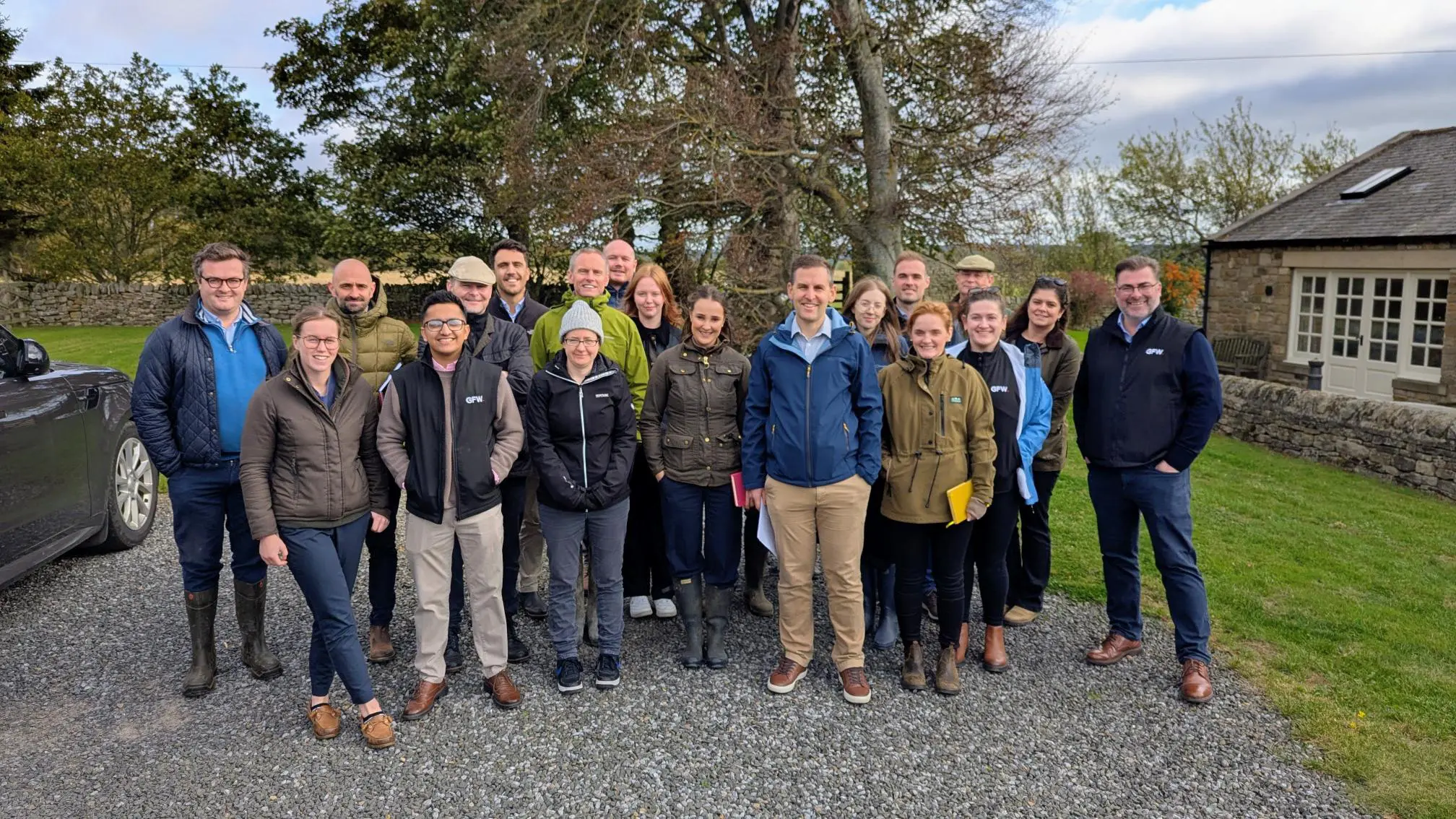
Following yesterday’s Budget, Elliot Taylor, Partner and Farm Business Consultant, shared his insight:


Registered Office
Dean Street Arch, 22 Dean Street, Newcastle upon Tyne, NE1 1PG
Following yesterday’s Budget, Elliot Taylor, Partner and Farm Business Consultant, shared his insight:
The Government has confirmed that any unused portion of the new £1 million APR/BPR allowance can now be transferred to a surviving spouse or civil partner. This change allows families to combine allowances, significantly increasing the amount of farm or business assets that can pass on with 100% relief from Inheritance Tax. For many farming families, this could mean the difference between a smooth succession plan and having to sell land or assets to meet tax liabilities.
This change could have a major impact on succession planning for farming families.
Here’s what it means in practice:
Scenario 1: Full £1 Million Transferred
Couple: Mark and Sarah
Business: Mixed farm worth £2.5 million
Ownership: All assets held jointly
Date: After 6 April 2026
Mark dies first. Everything passes to Sarah, so no Inheritance Tax is due at this point. Mark’s £1 million APR/BPR allowance isn’t used or transferred to children or other beneficiaries and transfers fully to Sarah.
When Sarah later dies, she has her own £1 million allowance plus Mark’s £1 million, giving her £2 million total APR/BPR allowance.
If the farm’s qualifying assets are worth £2m–£2.2m, the whole farm could pass to the children with 100% relief.
Without transferability, only £1 million could be used, leaving a large amount exposed to tax.
This example shows that the new portability of the APR/BPR allowance can preserve the entire farm, especially where assets pass to a spouse on first death, and the majority of IHT liability arises only on second death. It brings farming families more in line with the transferable nil-rate band principle.
Scenario 2: Part of the £1 Million Used
Couple: David and Helen
Business: Upland sheep and beef unit
Ownership: Separate assets
Date: After 6 April 2026
David dies first. He owns £700,000 of qualifying assets in his own name (e.g., his half share of land, buildings, livestock, machinery, and possibly business interests).
These assets are left directly to the children rather than to Helen (perhaps as part of a staggered succession plan).
How the allowance works here. David has a £1,000,000 APR/BPR allowance. He uses £700,000 to fully shelter the APR/BPR-qualifying assets left to the children. That leaves £300,000 of his allowance unused. Under the new rule, the unused £300,000 is transferred to Helen.
When Helen later dies, she has her own £1,000,000 allowance + £300,000 transferred from David = £1,300,000 total APR/BPR allowance. Helen owns £1.2m of qualifying assets, all passing to the next generation.
Because her available allowance is £1.3m, all her agricultural/business assets can now qualify for 100% relief.
The overall outcome is, on David’s death, all £700k of qualifying assets to the children are fully relieved. On Helen’s death, the full £1.2m she owns is also relieved. Without transferability, only £1m could be sheltered on second death, leaving £200k exposed to potential Inheritance Tax.
This new portability of APR/BPR allowances can preserve entire farms, especially where assets pass to a spouse on first death and the main tax liability arises later. It simplifies succession planning and reduces the risk of selling assets to meet tax bills.
Want to know what this means for your business?
Get in touch with our Rural team today for tailored advice.
The latest news from GFW.